Traditional funerals: organizing a farewell with respect and care
When a loved one passes away, the world seems to come to a halt, and living through this moment can be especially difficult. During a period of loss, relatives often find themselves in a state of emotional shock, when making decisions and dealing with organizational matters becomes particularly challenging. In such moments, organizing a funeral requires not only time and knowledge, but also a sensitive and professional approach.
Traditional funerals remain one of the most common and understandable ways of saying goodbye. They allow families to express grief, respect, and love while observing established religious and cultural traditions. The ANGEL funeral bureau takes care of all stages of funeral organization so that the family can focus on what matters most—saying farewell to a loved one.
Below, we explain in detail how the organization of traditional funerals takes place, what stages this process includes, and what assistance a professional funeral bureau can provide.
When traditional funerals are chosen
Traditional funerals as a form of farewell
Traditional funerals remain the most familiar and understandable farewell format for many families. This approach makes it possible to accompany a loved one on their final journey while observing established rituals and showing respect for the memory of the deceased.
Most often, this option is chosen when it is important to:
- follow religious rites;
- preserve cultural and family traditions;
- adhere to the classical order of funeral proceedings.
The role of traditions and religious rites
Traditions give funerals a clear structure and inner meaning. At a time of loss, when emotions are especially intense, familiar rituals, words, and sequences of actions help loved ones feel a sense of stability and order.
Religious rites, farewell speeches, and the procession from the ceremony to the burial site all form a respectful and understandable farewell scenario that is passed down from generation to generation. Such traditions help not only to express grief but also to preserve a connection with family and cultural values.
This is why traditional funerals remain relevant today: they provide an opportunity to say goodbye calmly, thoughtfully, and with a sense of inner closure.
1. Funeral organization: where the process begins
First steps after a loss
After the death of a loved one, the first and most important step is to contact specialists who can take over the organization of the funeral from start to finish.
We, the ANGEL funeral bureau, work around the clock and are ready to provide assistance immediately after contact, accompanying the family at every stage—from the first consultations to the farewell ceremony. You can reach us at any time by phone:
We also recommend reading our blog post "What to do if a person has died? A step-by-step guide," where we describe in detail how to act during the first hours and days after the loss of a loved one.
Additionally, we would like to inform you that in Latvia, funeral organization is carried out in accordance with established municipal regulations, and in Riga, burial rules and funeral service procedures are regulated by the Riga City Council. Official requirements can be found on the municipal website.
Document preparation when organizing a funeral
One of the key stages is the preparation and processing of documents. This process can be complex and exhausting, especially during a period of grief. We take care of:
- preparing the required certificates;
- coordinating the burial;
- interacting with institutions and services.
This helps avoid mistakes and delays. More detailed information about document preparation can be found in our blog post “Document preparation for funerals in Latvia: a step-by-step guide.”

2. Preparation of the farewell ceremony
The choice of the farewell ceremony format determines the atmosphere of the farewell, the ceremony script, and the overall perception of the day by loved ones. The format is selected based on religious beliefs, family wishes, the will of the deceased, and the possibilities of the chosen venue.
In practice, the farewell ceremony most often takes place in one of the following formats:
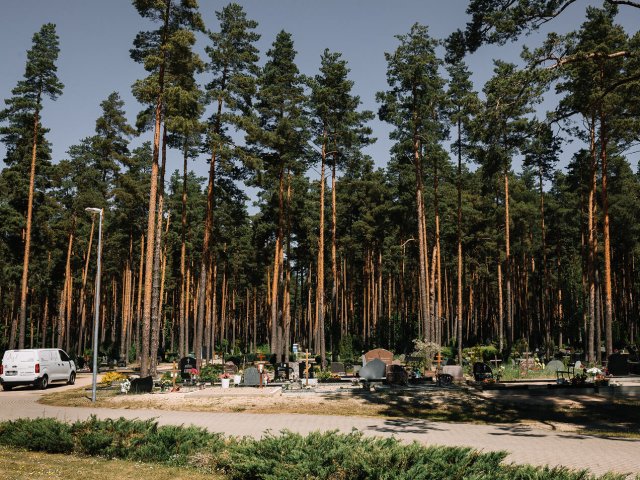
- in a cemetery chapel—a traditional format that allows the farewell to take place immediately before burial in a calm and focused atmosphere;
- in a farewell hall—a secular format that offers more flexibility in organizing the ceremony: choosing musical accompaniment, speeches, order of speakers, and overall atmosphere;
- in a church or temple—chosen when the farewell is conducted in full accordance with the canons of a specific faith, including a religious service, funeral rite, or mass.
As part of organizing the farewell ceremony, the ANGEL funeral bureau helps select a suitable location, coordinate the date and time, arrange the space, choose funeral accessories, musical accompaniment, and manage the overall ceremony so that the farewell takes place calmly, with dignity, and without haste.
You can read more about how a farewell ceremony is conducted and what nuances should be considered in our blog post: "Farewell ceremony: organizing a dignified goodbye to a loved one."
3. Funeral accessories for traditional funerals
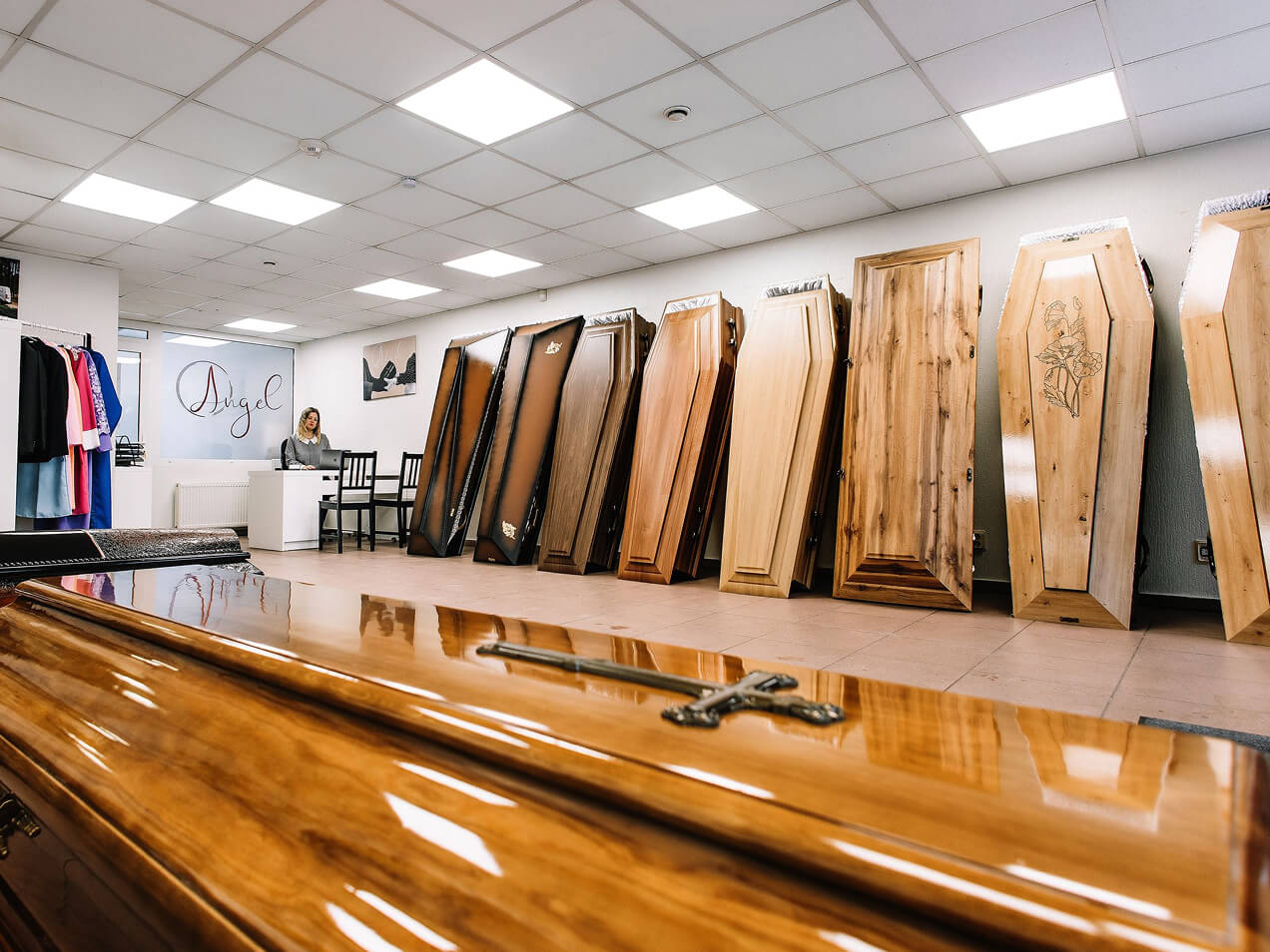
Coffin, cross, and name plaque
Choosing funeral accessories is an important part of preparing for traditional funerals. The main elements include:
- coffin;
- cross;
- name plaque with the name and dates.
Our specialists help select everything necessary, taking into account the budget, the family’s wishes, and the overall format of the ceremony, paying close attention to the quality and appearance of every detail.
Wreaths, flowers, and mourning ribbons
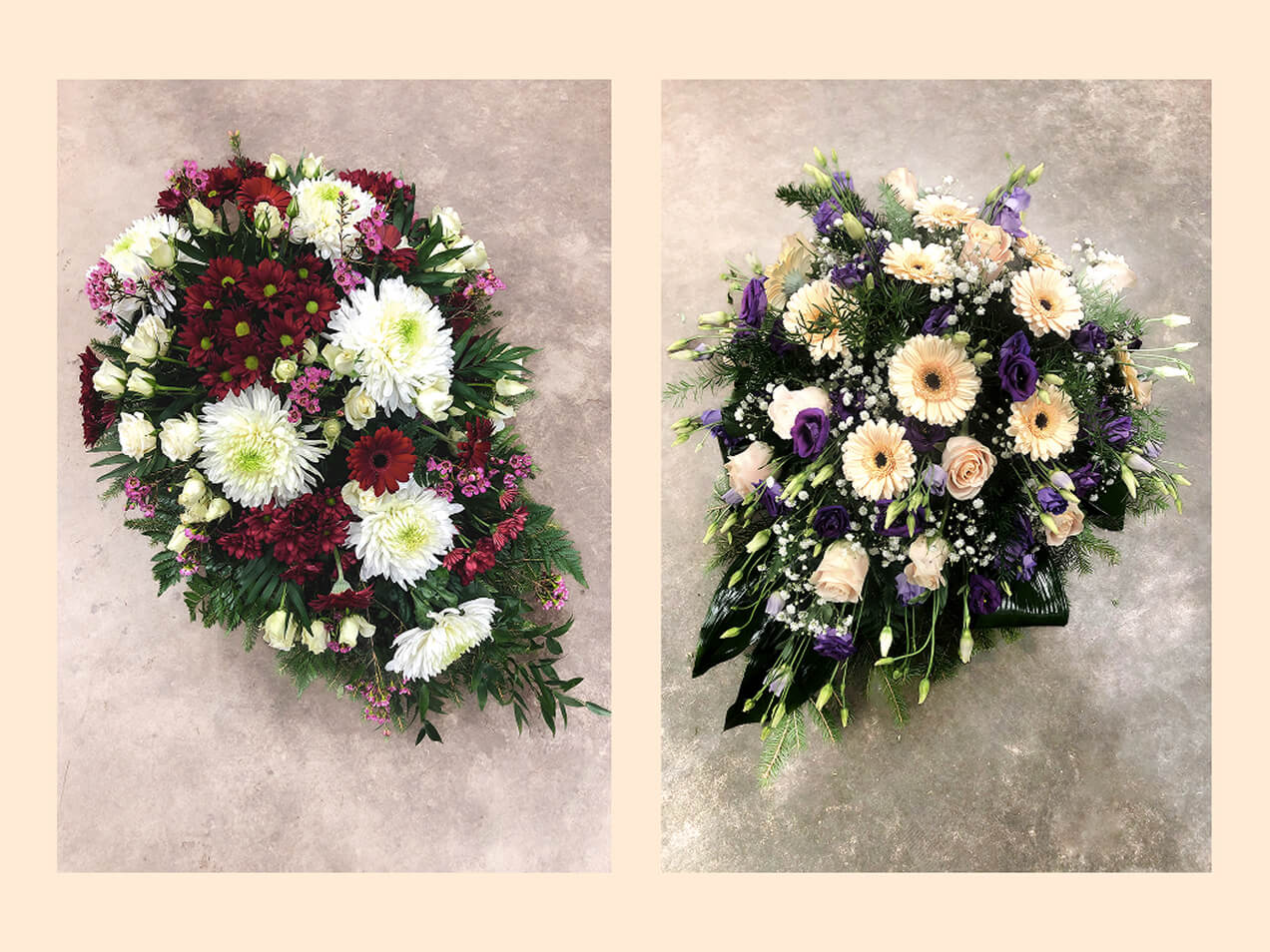
Flowers and wreaths are symbols of remembrance, respect, and farewell to a loved one. Our assortment includes various types of wreaths, bouquets, and mourning ribbons that allow you to express emotions and create a dignified ceremony setting.
The ANGEL funeral bureau offers a wide selection of all funeral accessories—from coffins and crosses to wreaths and floral arrangements—which you can review in advance on our website and choose a suitable option in a calm environment:
Musical accompaniment and ceremony host
Music and the words of the ceremony host create the overall atmosphere of the farewell. We help organize musical accompaniment and select a host for the ceremony.
4. Religious rites in traditional funerals
When organizing traditional funerals, we take into account the religious views and beliefs of the deceased’s family. The ANGEL funeral bureau provides assistance in conducting farewell ceremonies in accordance with various denominations—Orthodox, Catholic, and Lutheran traditions.
We help invite clergy, coordinate the order of the service, prayers, and rites, and ensure that all religious requirements are met so that the farewell is conducted in accordance with the faith of loved ones.
5. Preparation of the deceased for the ceremony
Preparation of the deceased’s body is aimed at giving the deceased a calm and dignified appearance before the farewell ceremony.
Preparation includes:
- sanitary treatment in compliance with all standards;
- cosmetic preparation to create a neat and natural appearance;
- careful dressing in the selected clothing.
All procedures are carried out by experienced specialists with respect for the memory of the deceased and with consideration of the family’s wishes, so that the farewell moment passes calmly and without unnecessary distress for loved ones.
6. Transportation and accompaniment of the deceased
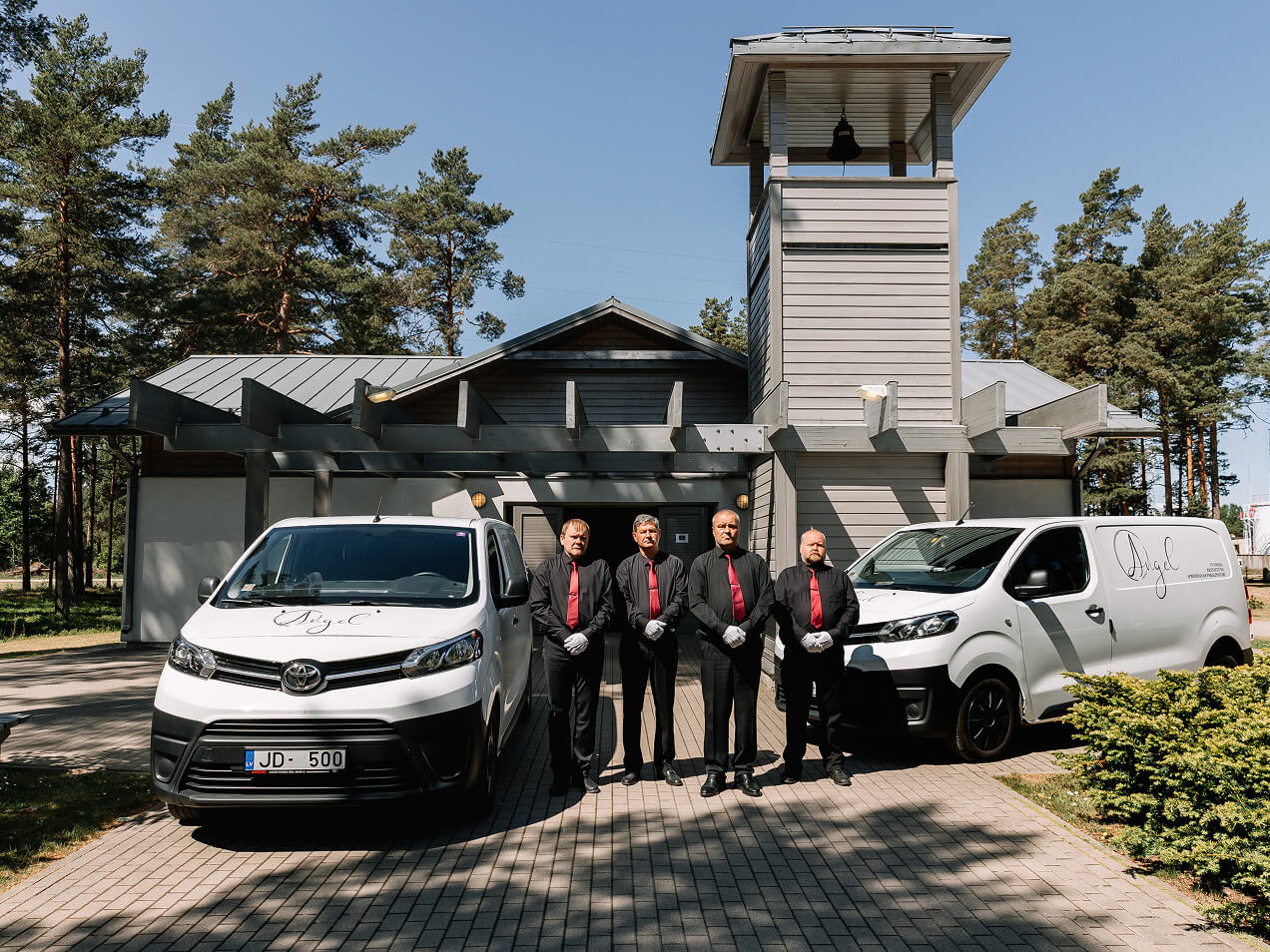
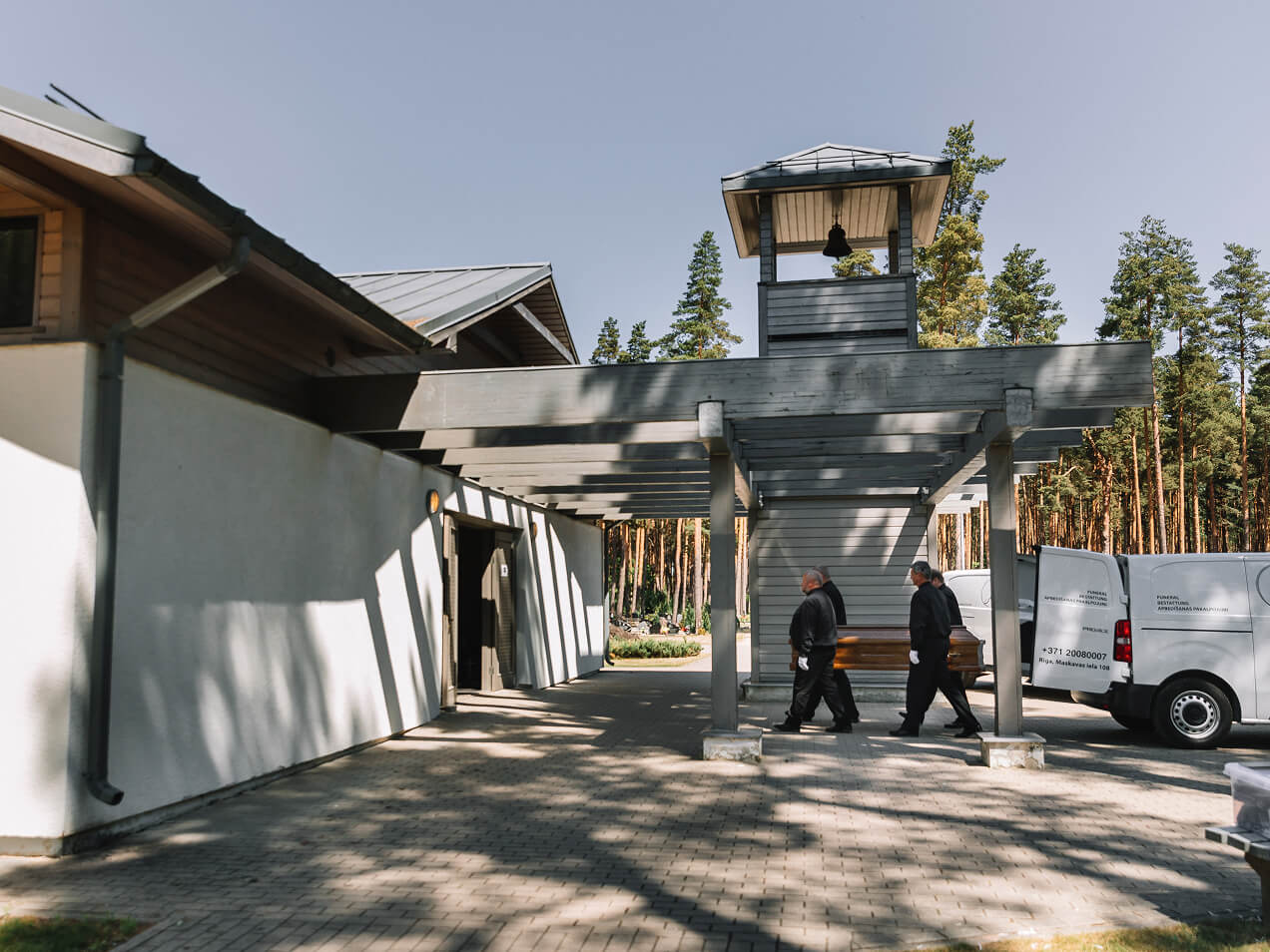
Transportation of the deceased is not merely a technical detail but part of the overall farewell process, requiring care and respect. Specialists from the ANGEL funeral bureau carefully organize the transportation of the deceased in a coffin—from home, hospital, or morgue—to the agreed location for the farewell and burial.
Throughout the entire ceremony, an experienced team of pallbearers is present. They accompany the deceased and ensure that every stage proceeds calmly, with dignity, and without haste.
If you need assistance or consultation regarding transportation, you can contact us at any time by phone:
We work around the clock and are ready to support you at the most difficult moment.
The role of the ANGEL funeral bureau in funeral organization
ANGEL is a funeral bureau with more than 10 years of experience. We know all the nuances related to funeral organization and act confidently and carefully.
We take care of everything—from documentation to the ceremony—so that the family is not left alone with difficulties.
A dignified funeral is not only about observing traditions, but also about caring for those who remain.
Mistakes and haste at such a moment can intensify stress. Professional funeral organization helps avoid unnecessary anxiety, ensures confidence at every stage, and allows traditional funerals to be conducted with dignity and calm.
The ANGEL funeral bureau operates 24/7. We are ready to take on all organizational matters and help conduct traditional funerals with respect and care. Contact us for a consultation:
Or visit the nearest branch: