What to do when a loved one dies abroad
The death of a loved one is always a severe ordeal, but when tragedy occurs abroad, the pain of loss is compounded by confusion, fear, and many unknowns. A foreign country, another language, different laws and procedures—all of this makes the situation especially difficult for the family. In such moments, it is important to understand what steps need to be taken and where to turn in order to ensure a dignified farewell to the deceased and comply with all formalities.
In this article, we will explain in detail what to do in the event of the death of a loved one abroad, what documents will be required, how the repatriation process works, and what assistance a professional funeral bureau can provide at each stage.

Death of a loved one abroad: where to start
When a loved one dies outside their home country, relatives often find themselves in shock. At this moment, it is important not to try to resolve everything on your own, but to act step by step with the support of specialists.
The first thing that must be done is to obtain official confirmation of the fact of death from local medical or law enforcement authorities. Without this, it is impossible to begin either the paperwork or the process of transporting the deceased back home.
At the same time, it is recommended to contact a funeral bureau that specializes in the repatriation of the deceased from abroad as soon as possible. The ANGEL funeral bureau has experience organizing repatriation from various countries and takes over all key stages of the process—from document preparation to transporting the deceased home. This helps avoid mistakes, delays, and unnecessary emotional strain for the family.
First steps after a death abroad
Who to contact first
In a situation where the death of a loved one occurs abroad, the most correct and calm decision is to contact a professional funeral bureau as early as possible.
First of all, we recommend immediately contacting the ANGEL funeral bureau—our specialists will take over the entire organization process: from interacting with foreign services and consulates to document preparation and repatriation of the deceased. This allows the family to avoid confusion, mistakes, and unnecessary stress, knowing that all necessary steps are carried out professionally, correctly, and with respect for the memory of the loved one.
Theoretically, in most cases, the procedure looks as follows:
- local medical services or police record the fact of death;
- a medical certificate stating the cause of death is issued;
- relatives or representatives contact their country’s consulate;
- a funeral bureau specializing in international repatriation is engaged.
The consulate can provide general information, but it is the funeral bureau that takes care of the practical aspects: interaction with foreign institutions, document processing, and transportation arrangements.
Additionally, we recommend reviewing the official information from the Ministry of Foreign Affairs of Latvia regarding actions to take in the event of a citizen’s death abroad.
Why it is important to involve professionals immediately
Organizing repatriation abroad independently is almost always accompanied by difficulties: language barriers, lack of knowledge of local requirements, and the need to make urgent decisions. Mistakes at this stage can lead to delays, additional expenses, and severe emotional burnout.
Professional support allows the family to focus on saying goodbye rather than on complex formalities.
Document preparation abroad
Main documents for repatriation
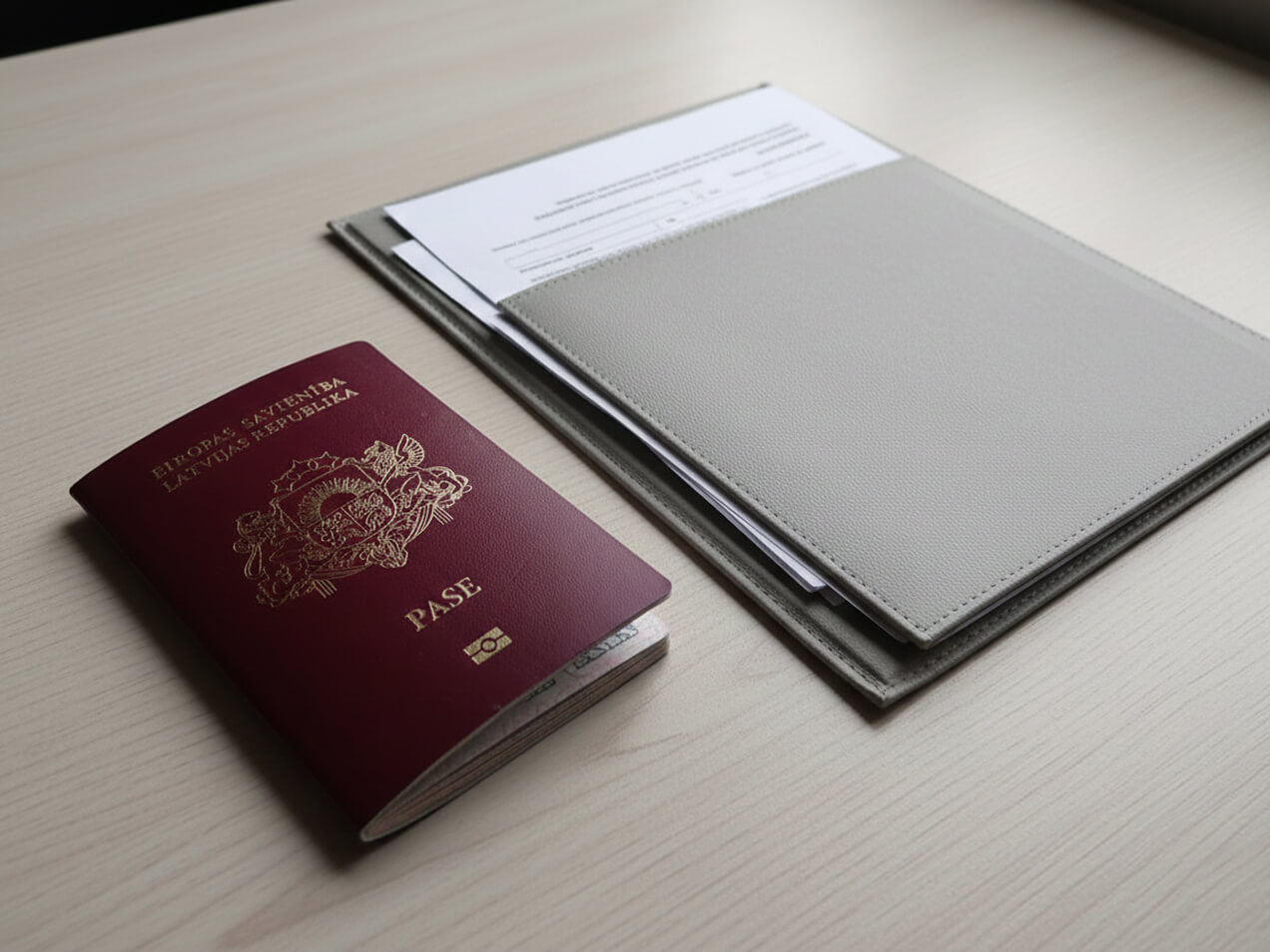
To organize the repatriation of a deceased person from abroad, a mandatory set of documents is required.
It usually includes:
- a medical certificate stating the cause of death;
- a death certificate issued by local authorities;
- the deceased’s passport;
- permission from the Health Inspectorate for international transportation of the body;
- the deceased’s birth certificate;
- a certificate authorizing the burial of the deceased.
Depending on the country, the list may be supplemented with other certificates or permits. More details about which documents are required and how they are processed can be found in our blog, dedicated to document preparation for organizing funerals.
Additional documents and consents
In addition to the main set of documents, additional legal and administrative requirements often arise during the repatriation of a deceased person from abroad. These are related to international transportation rules, the specifics of a particular country’s legislation, and the need for official confirmation of decisions by relatives.
Additional requirements may include:
- written consent from relatives for repatriation;
- a power of attorney for a funeral bureau representative;
- notarized translations of documents.
Obtaining and processing all these papers requires time and precision, so the ANGEL funeral bureau takes care of this process, relieving the family of bureaucratic difficulties. We are available 24/7:
Repatriation of the body or ashes: how the process works
What is repatriation
Repatriation is the process of transporting the body or ashes of a deceased person from another country back to their homeland for subsequent burial or cremation. This is a complex procedure that is strictly regulated by international and national rules.
Transportation of the deceased’s body
Repatriation of the body is carried out using special transport and usually involves air transportation. The body is prepared in accordance with sanitary standards, a sealed zinc-lined coffin is used, and all stages are coordinated with the relevant authorities.
Repatriation after cremation
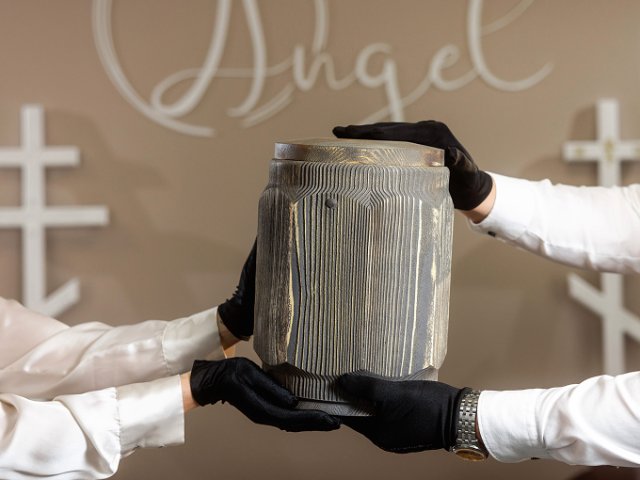
In some cases, the family chooses cremation abroad followed by transportation of the urn with ashes. This option is often simpler in terms of documentation and logistics, but it also requires compliance with established rules and permits.
Funeral arrangements after returning to Latvia
Farewell ceremony
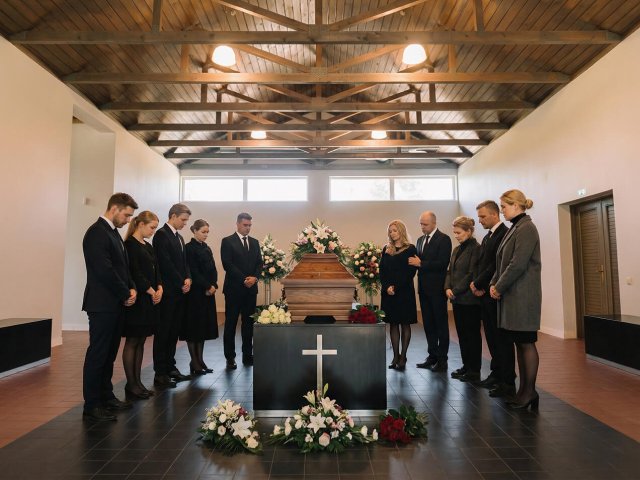
After the deceased returns to Latvia, the family can organize a farewell ceremony. The format is chosen individually—religious or secular, in a chapel, a farewell hall, or in a close circle of loved ones.
The ANGEL funeral bureau helps coordinate the place, date, and time of the ceremony, organize decorations, musical accompaniment, and the overall conduct of the farewell.
Choosing the method of burial
After the repatriation of the deceased to their homeland, the family faces the next important stage—choosing the format of the farewell and burial. This choice makes it possible to organize the funeral in accordance with the wishes of the deceased, family traditions, and the capabilities of a particular cemetery or region.
After repatriation, the following options are possible:
- traditional burial;
- cremation;
- burial in a family grave or columbarium.
The final decision is made taking into account the wishes of the family, the expressed will of the deceased during their lifetime, as well as current burial rules and conditions. The ANGEL funeral bureau helps navigate all options and select the most appropriate solution so that the farewell takes place with dignity and calm.
How the ANGEL funeral bureau helps in the event of death abroad
Full repatriation cycle
The ANGEL funeral bureau specializes in the repatriation of deceased persons from abroad and provides a full range of services:
- organization of transportation from anywhere in the world;
- preparation of all necessary documents;
- interaction with foreign and Latvian institutions;
- support at every stage of the process.
Support for the family
We understand how difficult this period can be. Therefore, we provide:
- 24/7 consultations:
- clear and transparent organization;
- human support and attention to detail.
Why it is important not to act alone
Attempts to organize repatriation without professional assistance often lead to:
- errors in documentation;
- transportation delays;
- additional financial costs;
- increased emotional stress.
Turning to specialists helps avoid these risks and ensures that everything is done correctly and with respect for the memory of the deceased.
We are here when it is especially difficult

The ANGEL funeral bureau works around the clock and is ready to help in the most difficult situations, including when a loved one passes away abroad. We take care of all organizational matters related to the death of a loved one abroad and the repatriation process, so that you can focus on saying goodbye and supporting each other.
Contact us at any time for a consultation:
We are here to support you with respect, care, and professionalism.